
- January 12, 2026
- Rae Day
When I first visited this home, it was during the construction phase.
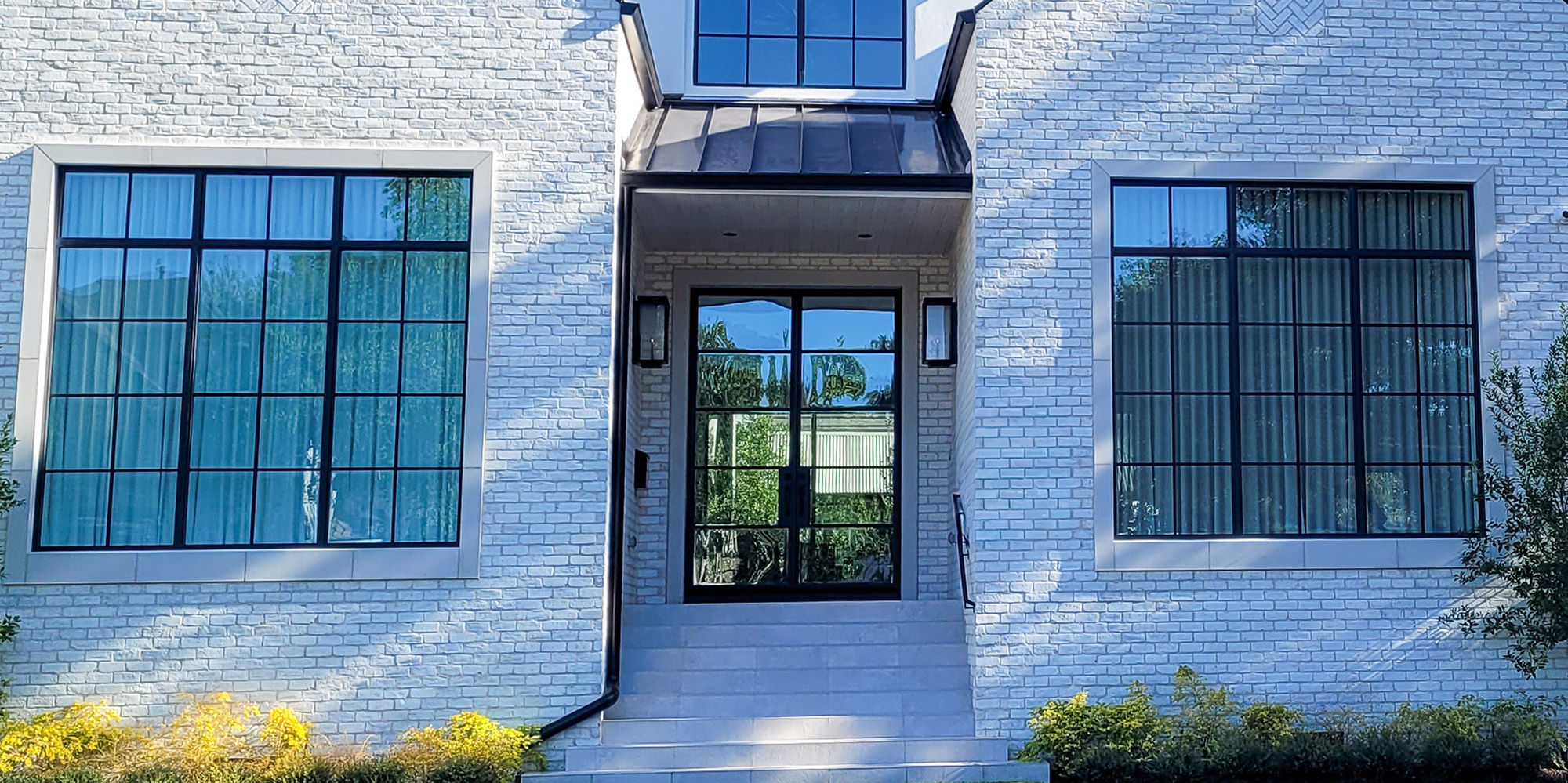
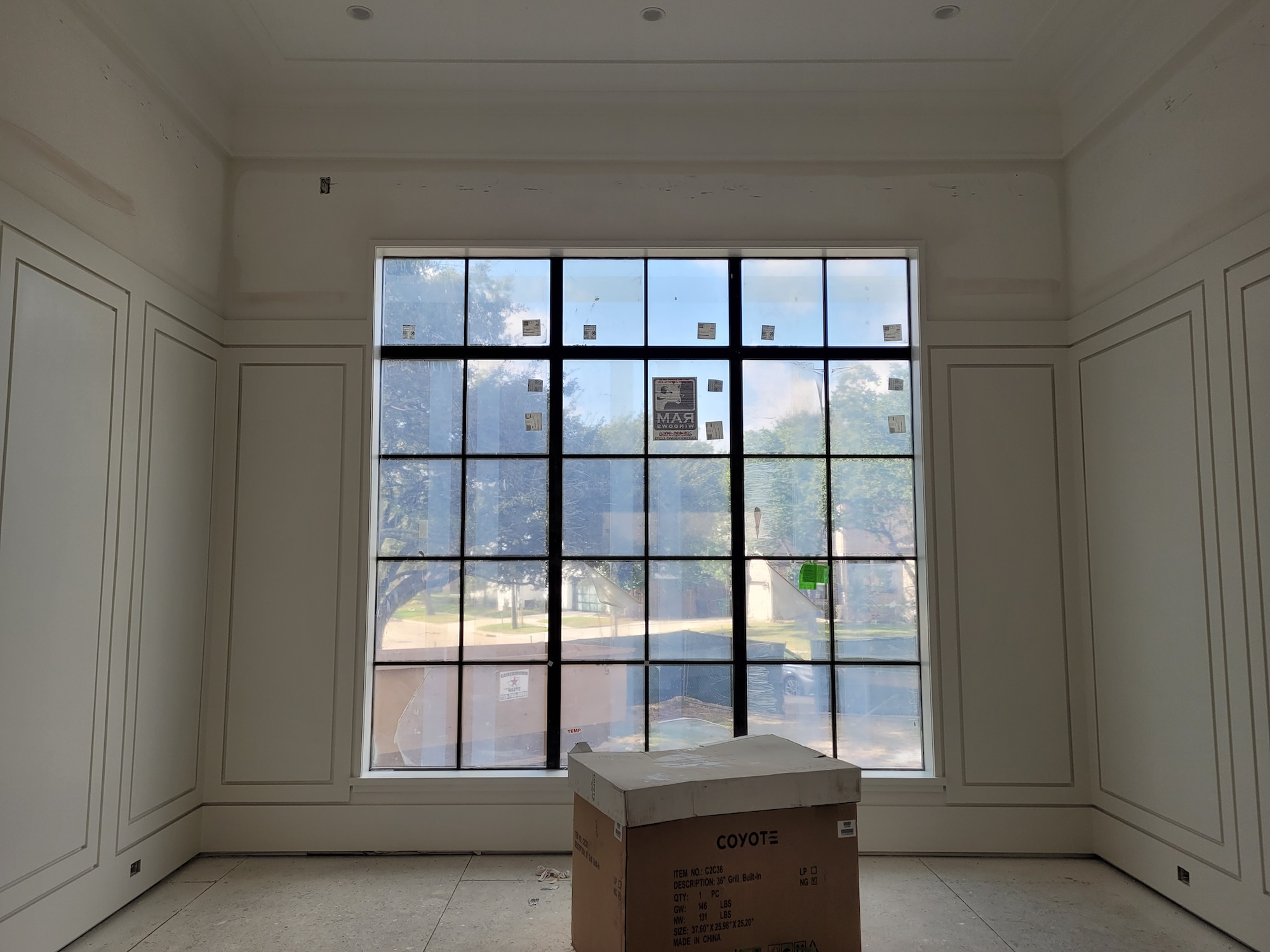
Sheetrock dust was everywhere, and there was no indication of the homeowner’s personality to help guide me in planning their window treatments. At first glance, the two front rooms appeared identical.
Like seriously, I only took a pic of the dining room because I could use it for both! If we were making decisions based purely on symmetry, the answer would have been simple: treat them exactly the same.
Same Room, Different Solution
Book-matching either side of a grand front entry, they share the same western exposure. Luckily the dining room is close to some big trees, which helps in there. No such luck for the office, though. Any trees on that side were removed before the house was built.
Now it was time to think about how the rooms would be used. While these rooms mirror each other structurally, they have very different lives. One is a formal dining room, and so is used primarily in the evenings. The other is a private office and is used daily.
Designing for Light, Heat, and the Houston Sun
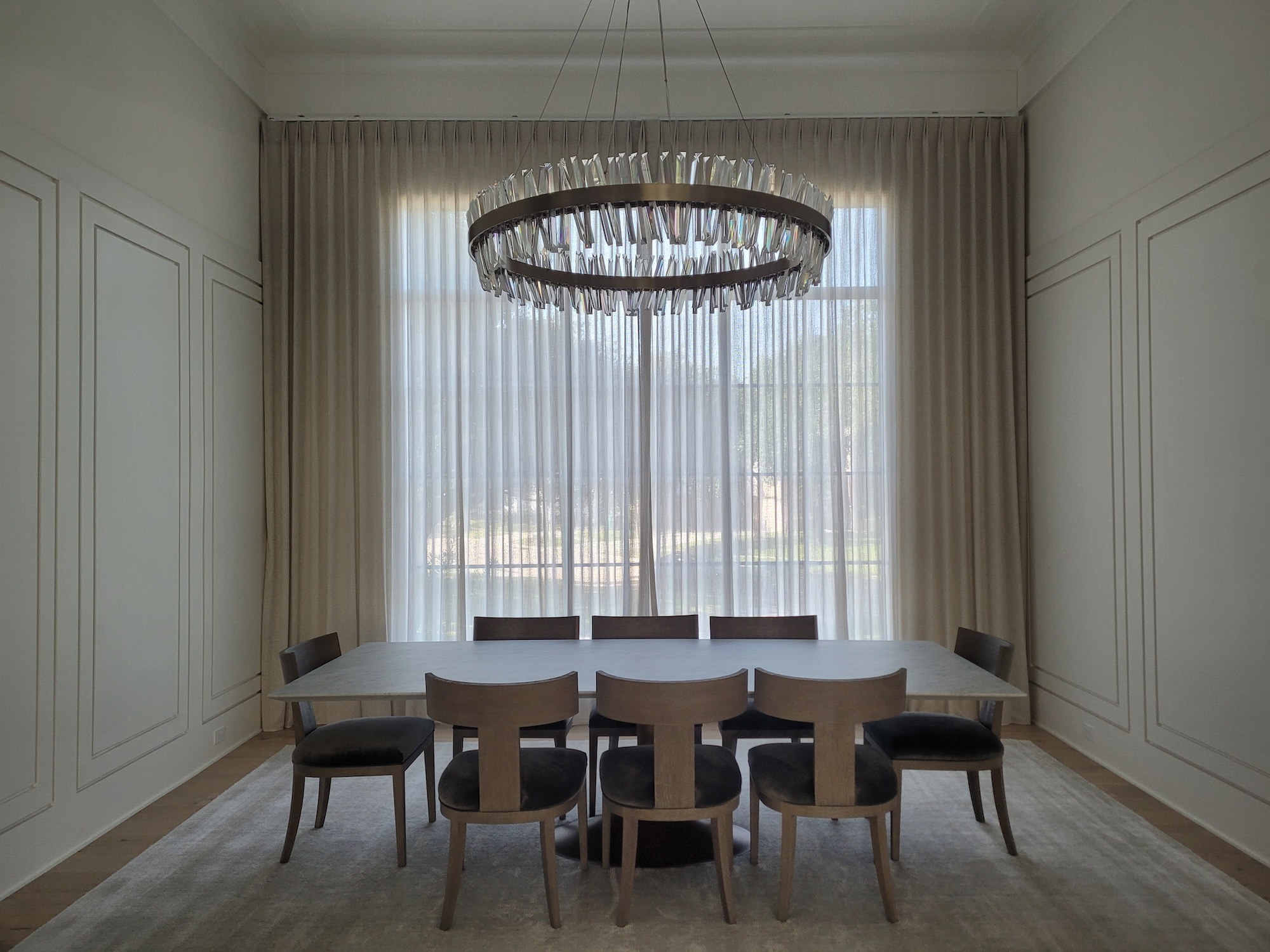
The original design idea, which we loved, was to use matching sheer draperies in both rooms. Light and airy, sheers continue the serenity of all-white walls along the window wall. It is impossible not to draw attention to a window treatment that is twenty feet wide and just as tall, and we wanted to limit this effect so as not to overwhelm the space.
As much fun as I would have in a room where everyone’s first thought is, “Wow, check out the drapes!”, I understand that’s maybe not what other folks might want. 😊
In the dining room, that vision worked beautifully. The room isn’t typically occupied during peak sun hours, and no one needs to see a computer screen there anyway. Classic sheers provided exactly what was needed: softness, texture, and filtered light without sacrificing the view.
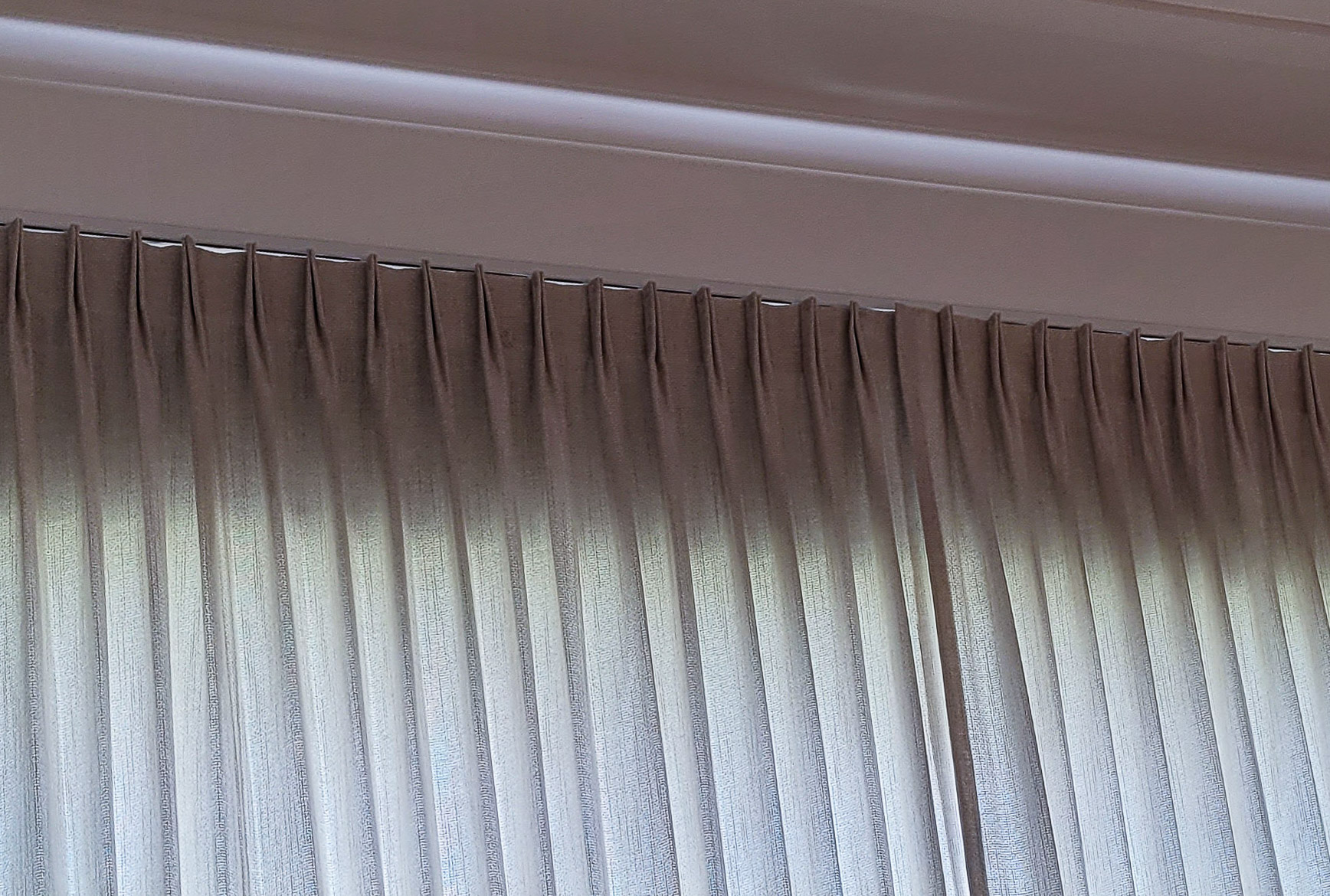
The plain white drapery tracks were mounted high, just below a trim detail, so the fabric could fall cleanly without the distraction of decorative hardware.
When Sheers Won’t Cut It
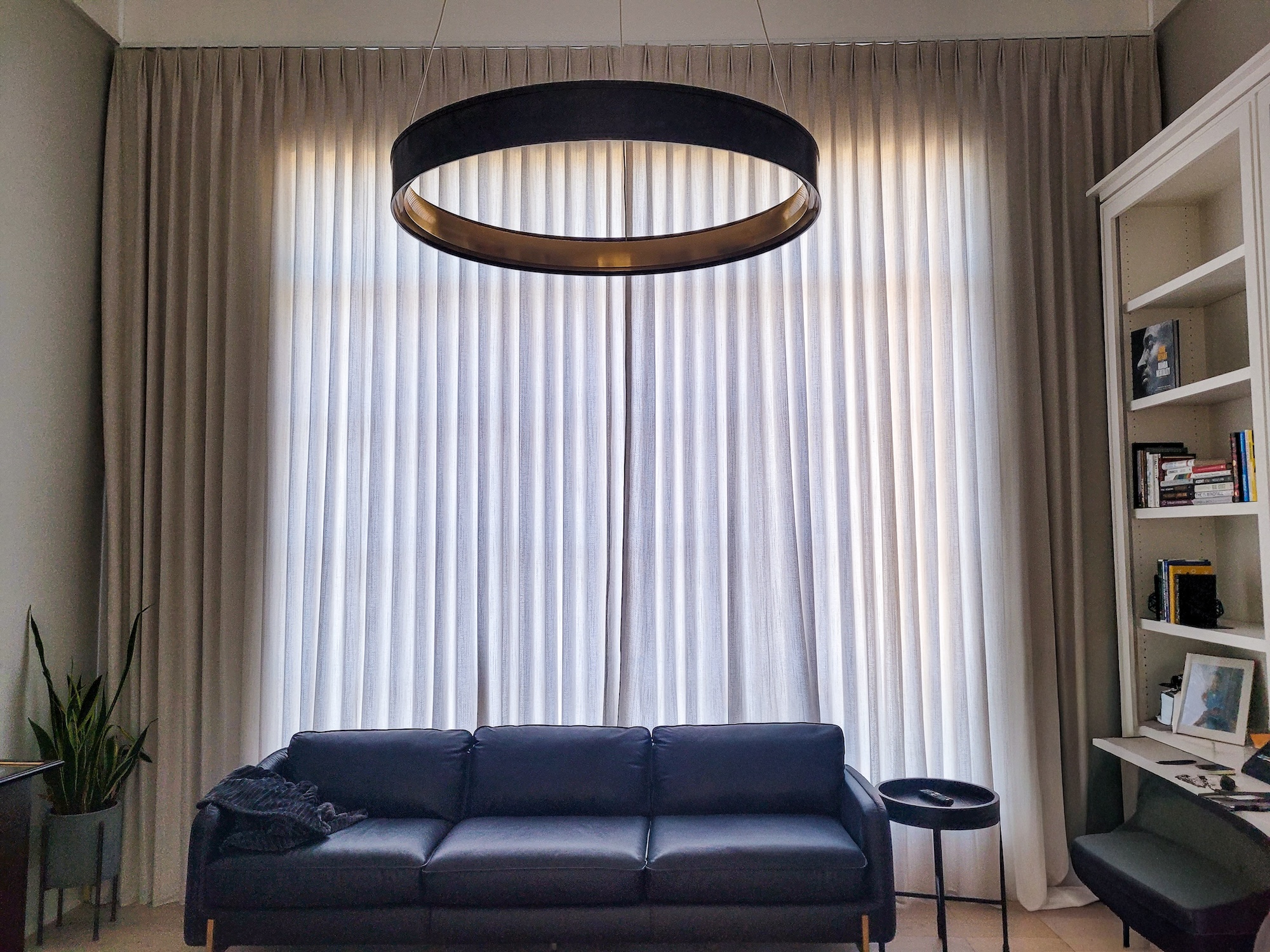
The office was another story. After living in the home and using the space daily, the homeowners knew there was no way a sheer alone would provide enough sun protection at three o’clock in the afternoon. West-facing windows are no fun to be near during most afternoons in Houston. So, we adjusted the plan, but as little as was needed to achieve sun control.
A Subtle Upgrade with Major Impact
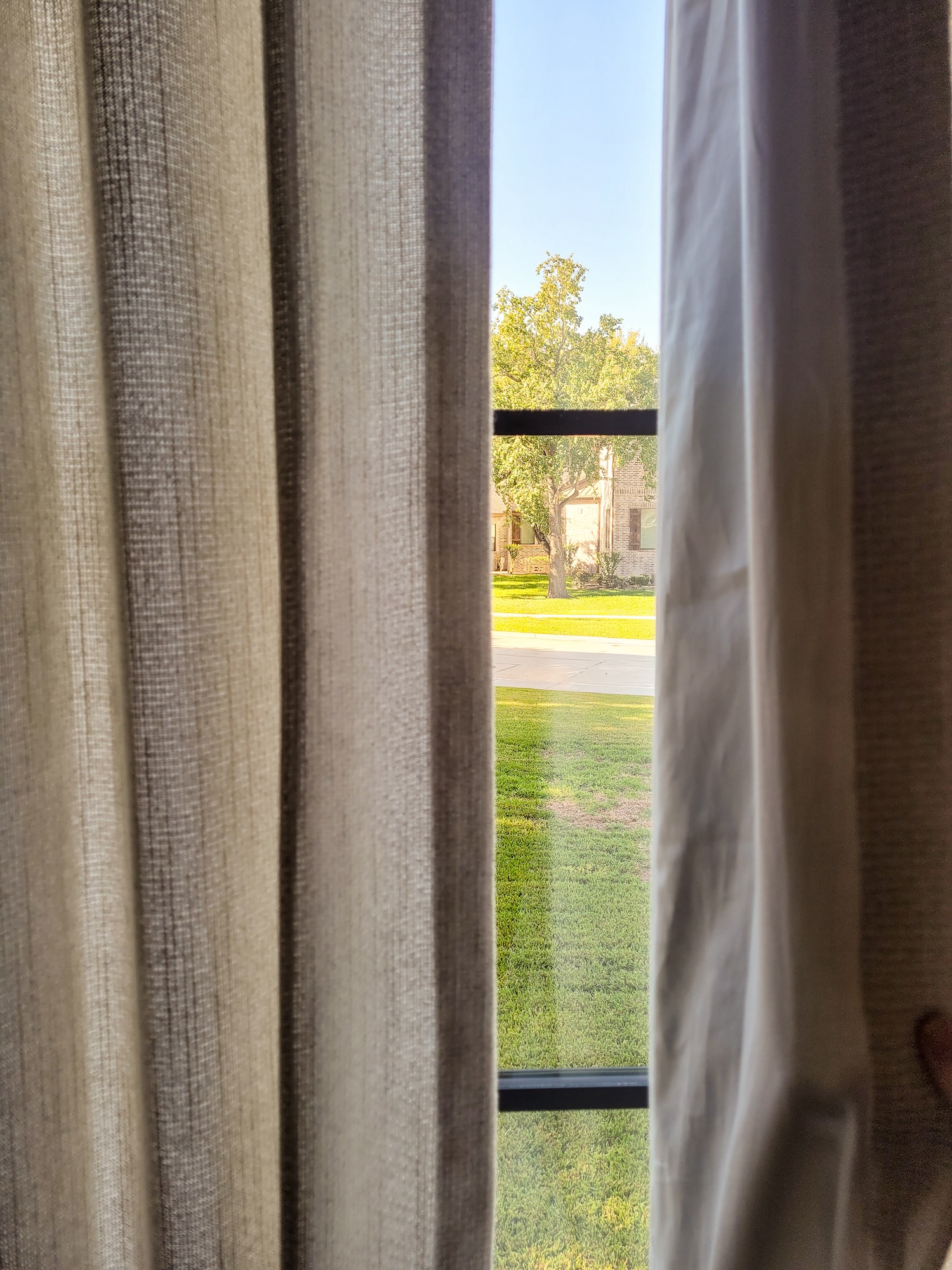
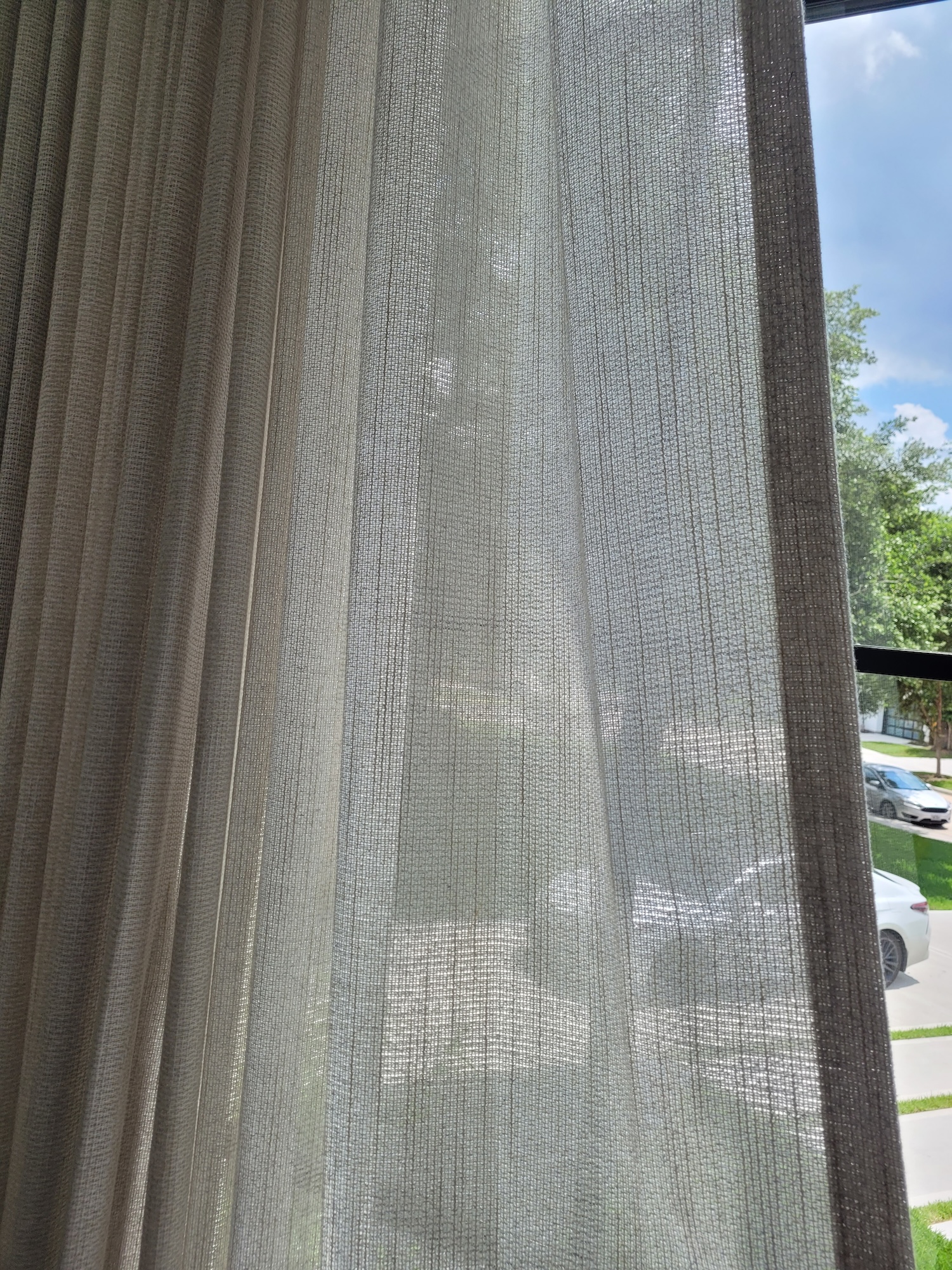
We kept the same sheer fabric to maintain visual continuity but added a layer of privacy lining. It subtly increased the drape’s opacity and sun protection without changing the overall look from the inside.
Check out that top photo again: yes, you can tell the difference if you’re standing outside and studying the windows closely. But from within the home, you never see both rooms at the same time. The aesthetic remains intact and the functionality is dramatically improved.
Why Motorization Was a Must
Both rooms were outfitted with motorized drapery hardware. In this home, motorization was not a luxury—it was practically a necessity. A 20′ by 20′ wall of fabric would be cumbersome to operate manually, and this is a busy household with active kids. Motorization protects the draperies, simplifies daily life, and allows the homeowners to control light effortlessly throughout the day through home automation scheduling.
Texture Makes All the Difference
As always with draperies, fabric selection played an important role. Rather than a flat sheer, we chose a heavily textured semi-sheer with multiple yarn colors running through it. On a wall this large, texture creates depth and richness without too much contrast. The result is quiet, layered, and luxurious. In other words, exactly what we wanted.
Simplicity, Beautifully Executed
Oftentimes, the best design decisions are the ones you barely notice. The ones that work so perfectly that when you mention them, the response is “Well, duh!”
Ready to explore what will work best for your space? Click here to start the conversion.